

Why AI agents need business-process context to work reliably

In a 2026 McKinsey survey of 1,000 managers and executives at medium and large companies, almost 90% said their organisations were experimenting with AI. Only 7% had scaled it across the enterprise. An agent’s output can trigger what happens next in a live process.
Consider an ordinary customer order. An agent can draft a delivery confirmation in seconds. If its delivery status is out of date, the promised date can be wrong however polished the message sounds.
The information is usually spread across several teams and systems. Sales knows what was agreed, operations records what has been delivered, and finance manages the invoice and payment. The order-to-cash process ties these stages together.
As a data scientist, I would start with the meaning of the data. A delivery date is useful only if the agent knows which order it belongs to, when it was updated and whether it has been confirmed. Shared identifiers and clear process states make those checks possible. In my work, deciding which status is authoritative, how fresh it must be and who may act on it has often taken more work than choosing the model.
Every step leaves a record: an order, delivery event, invoice, payment or decision. AI uses those records as context and returns a summary, recommendation or action to the process. Current information may help the order move; missing or stale information may create another exception. The business result still comes from fulfilling the order, recording revenue correctly, issuing the invoice and collecting payment.
The process tells the agent what the case means
An agent needs more than access to individual systems. It needs a common case identifier, timestamps showing when records changed and clear definitions for each process state. These let it check whether records belong together, are current enough to use or conflict. The process defines what each state means and who owns it; the systems must make that information available.
Before assigning work to an agent, the process owner should describe the allowed states and the conditions for moving between them. An order may be confirmed, waiting for delivery, ready to invoice, invoiced or paid. Missing or conflicting information should trigger escalation. The agent should not be expected to infer a business rule that the organisation has never defined.
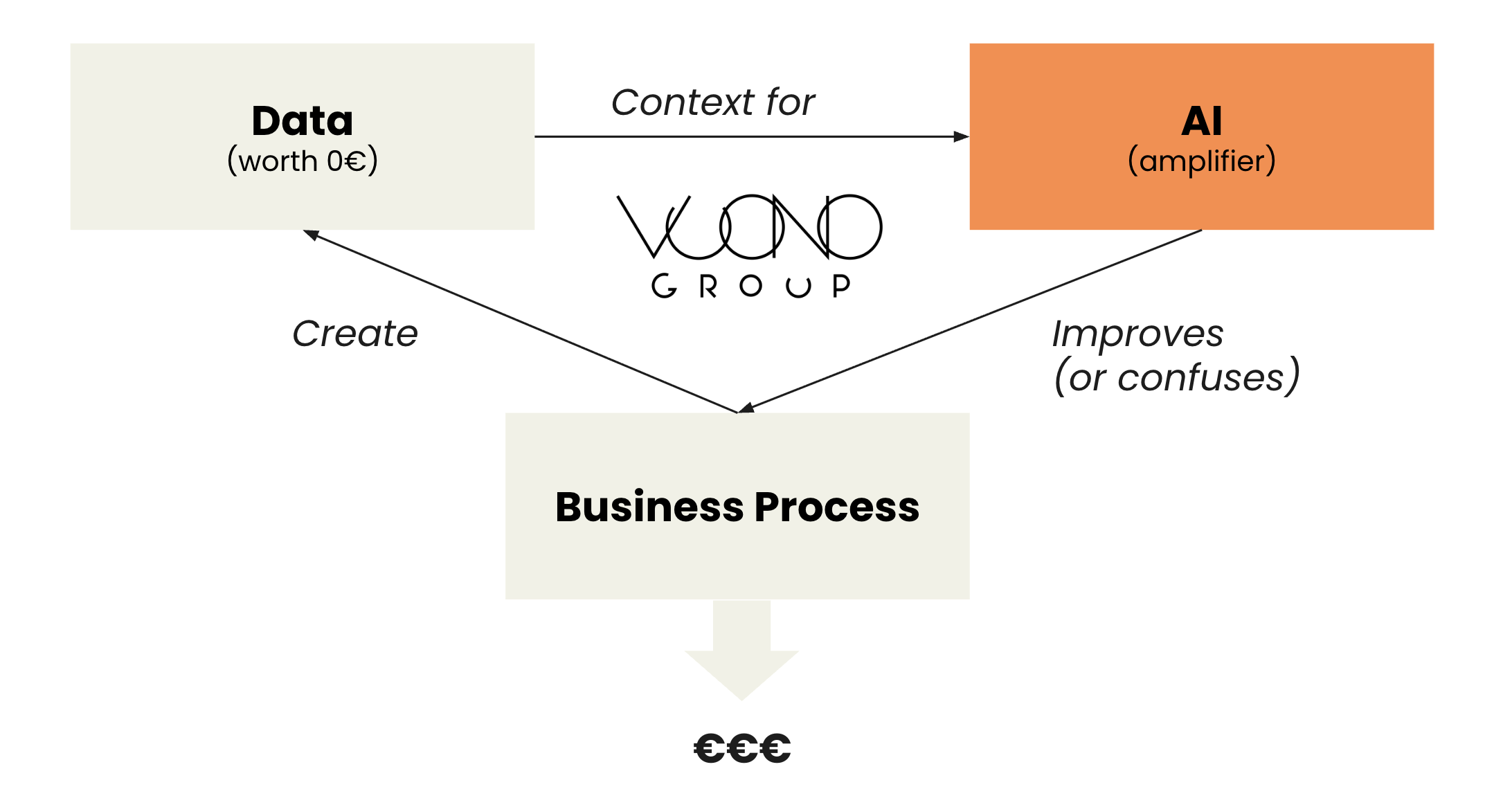
Caption: AI amplifies the information it receives. Customers encounter the result in confirmations, delivery dates and invoices. The process carries the effect into revenue, margin, costs and cash flow.
Useful autonomy needs clear boundaries
An agent does not need the same freedom at every point in the process. In the order-to-cash example, it could check the required order details, retrieve the delivery status, prepare a customer confirmation and identify the team responsible for the next step. It might also alert the owner when an expected step is overdue. Each task has a different consequence if the agent makes a mistake.
The boundaries can be defined in ordinary operational terms. The agent needs an objective, access to the current process state, a set of available actions and clear escalation conditions. A 2023 research manifesto on AI-augmented business-process management calls this framed autonomy: the system can choose how to progress a case within a defined process frame.
An internal, read-only status summary and a confirmation sent to a customer need different boundaries. For each action, ask four questions: Can the agent change a system of record? Can the change be undone? Who will see the result? What happens if it is wrong?
The agent’s actions also need to remain visible. A colleague continuing the order should see what information was checked, what was changed and why the order was sent for review. The final outcome belongs in the process record so that it can inform the next decision and help the process owner spot recurring sources of rework.
Start with one routine process
To give an agent useful context and set sensible boundaries, I would start with a routine process whose owner, volume and outcome are clear. The people doing the work should be able to explain the normal path and recognise exceptions quickly.
A useful sequence is:
- Describe how the work normally moves from start to completion.
- Define the process states and information required at each stage.
- Document the actions employees currently take, including handovers and points that require judgement.
- Let the agent gather information and propose the next step before giving it permission to perform one reversible action.
- Record the outcome, human corrections and cases sent back because information was missing.
Compare results with a pre-agent baseline. Track order-confirmation and delivery-to-invoice time, corrections, handovers, escalations and human overrides. Invoice-to-payment time is useful but also reflects payment terms, disputes and customer behaviour, so do not attribute every change to the agent.
The resulting one-page operating frame should state what the agent sees, what it may do, when a person reviews its work and how the outcome is recorded. Different answers across teams reveal unresolved definitions or ownership.
After the first cases, compare the process record with what actually happened. Repeated corrections or missing data tell the owner where to change the process, source data or permissions.
Start by allowing one reversible action. Add another only when the record shows fewer delays and corrections without shifting work to another team. Customers see the result in ordinary details: the delivery date holds and the invoice is right. The business sees it in whether the order is fulfilled, invoiced and paid.
Eero Siivola is a Senior Data Scientist holding a Ph.D in machine learning and over a decade of experience applying advanced analytics across diverse domains. He specialises in designing data and AI workflows, enterprise data architecture, analytical models, and leading projects from concept to delivery. He has a proven ability to translate customer needs into practical solutions that drive measurable business impact.
Vuono Group is a process AI company creating superior business processes through data and AI. While AI technologies are advancing rapidly, processes remain the decisive factor in turning AI investments into measurable business impact – from productivity gains to strengthened competitiveness and new sources of growth. Vuono Group has been driving this work across Nordic enterprises and public sector organisations in recent years. The impact is visible in both operational performance and business metrics. www.vuonogroup.com